
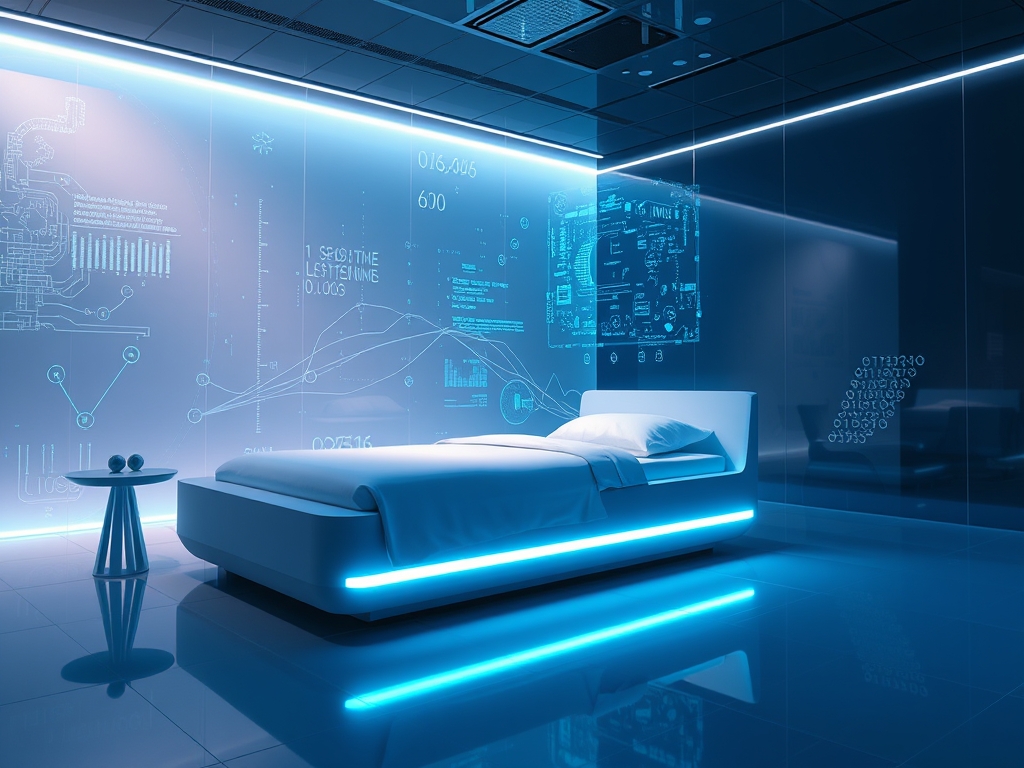
Smart Bed Temperature Control is the active management of a sleep surface’s thermal state through sensor-driven hardware and automated feedback loops. It allows the mattress or topper to adjust dynamically in response to the user's biological signals or preset environmental triggers. This technology represents a significant shift in sleep hygiene by moving beyond passive insulation toward active thermoregulation.
In the current tech landscape, we are witnessing a move from biometric tracking toward biometric intervention. While early wearables merely informed users that they slept poorly, modern temperature control systems act on that data to improve sleep quality in real time. As global temperatures rise and the demand for high-frequency performance increases, mastering the microclimate of the bed has become a critical focal point for the health-tech industry.
The Fundamentals: How it Works
The core principle behind Smart Bed Temperature Control is the manipulation of the body's core thermal set point. Humans require a drop in core body temperature to initiate sleep and enter deep recovery stages. Smart beds facilitate this through three primary hardware mechanisms: water circulation, air convection, or thermoelectric cooling.
Think of it like the radiator in a high-performance vehicle. In water-based systems, a network of thin silicone tubes sits beneath the sheets. A bedside thermal engine heats or cools the water and pumps it through the pad; this transfers heat away from or toward the body through conduction. Air-based systems use fans to move conditioned air through porous fabrics, relying on convection to evaporate sweat and cool the skin.
The software logic layer is what makes these systems truly smart. Ambient light and noise sensors pair with heart rate variability (HRV) and respiratory tracking to identify which sleep stage a user is in. When the system detects a transition from light to deep sleep, it lowers the temperature to prevent waking. Toward the morning, the system gradually increases the heat to stimulate the production of cortisol and help the user wake up naturally without an alarm.
Pro-Tip: Microclimate vs. Room Climate
Optimizing the bed's temperature is significantly more energy-efficient than cooling an entire bedroom. Focusing on the six inches of space around the body allows for a more aggressive thermal shift while lowering your monthly utility costs.
Why This Matters: Key Benefits & Applications
Smart Bed Temperature Control offers tangible improvements to recovery and daily energy levels. By removing thermal stress from the sleep equation, the body can allocate more resources to cellular repair and memory consolidation.
- Deep Sleep Extension: By maintaining a precise cool temp during the middle of the night, users often see a 15% to 20% increase in slow-wave sleep duration.
- Insomnia Mitigation: Rapid cooling of the skin helps "signal" the brain that it is time to sleep; this significantly reduces sleep onset latency (the time it takes to fall asleep).
- Dual-Zone Customization: Couples often have different metabolic rates; smart systems allows each side of the bed to operate at different temperatures to resolve "sleep divorce" caused by climate preferences.
- Athletic Recovery: Cold thermoregulation helps reduce systemic inflammation after high-intensity training by facilitating better blood flow during the night.
Implementation & Best Practices
Getting Started
Begin by choosing the right hardware category for your environment. If you live in a humid climate, water-based conduction systems are more effective at heat transfer than air-based fans. Install the system and set the initial temperature to 68°F (20°C) for the first three nights. Do not make drastic changes immediately. Your body needs several days to calibrate to the new thermal environment before you begin fine-tuning for specific sleep stages.
Common Pitfalls
The most common mistake is setting the temperature too low. While "cool" is beneficial, "cold" triggers a stress response that increases heart rate and disrupts REM (Rapid Eye Movement) cycles. Another pitfall is ignoring the ambient humidity of the room. If the air is too humid, the conductive cooling of the bed can lead to condensation under the mattress. Ensure your bedroom remains between 30% and 50% humidity for optimal system performance.
Optimization
To truly optimize the experience, sync your bed with your wearable data via platforms like Apple Health or Oura. This creates a closed-loop system where the bed learns from your previous night's recovery scores. If your resting heart rate was high the night before, the system can automatically drop the temperature by 2 degrees to assist with recovery.
Professional Insight
The "Thermal Trigger" for waking up is just as important as cooling for falling asleep. Set your system to increase the temperature by 5 to 8 degrees roughly thirty minutes before your desired wake-up time. This mimics the natural rising of the sun and suppresses melatonin production; it provides a much smoother transition to alertness than an auditory alarm.
The Critical Comparison
While traditional passive bedding materials like "cooling gel" memory foam or bamboo sheets are common, Smart Bed Temperature Control is superior for consistent recovery. Passive materials only work by absorbing a finite amount of heat before they reach thermal equilibrium with your body. Once the material is saturated, it begins to reflect heat back toward you; this often causes "hot flashes" at 3:00 AM.
Active smart systems are superior because they provide a continuous heat sink. They actively transport heat away from the mattress and dissipate it into the room. While a gel mattress might feel cool for the first twenty minutes, a smart system maintains the exact target temperature for eight hours straight. For individuals with high metabolic rates or those living in warm climates, passive solutions are rarely sufficient for uninterrupted sleep.
Future Outlook
Over the next decade, we will see Smart Bed Temperature Control integrate more deeply with AI-driven preventative healthcare. Future systems will likely use "Predictive Thermal Adjustments" based on your daily activity levels. If your smartwatch detects you ran a marathon or are fighting a viral infection, the bed will preemptively adjust its cooling profile to manage your elevated body temperature.
We also expect to see a shift toward sustainable, low-power thermoelectric cooling modules. These modules utilize the Peltier effect (creating a temperature difference by transferring heat between two electrical junctions) to eliminate the need for pumps or moving water. This will make the technology more durable and easier to integrate into standard mattress manufacturing. Privacy will remain a priority; manufacturers will move toward edge-processing, where sleep data is analyzed locally on the device rather than in the cloud.
Summary & Key Takeaways
- Circadian Alignment: Smart Bed Temperature Control synchronizes with your body's natural thermal rhythms to improve sleep onset and depth.
- Efficiency: Active cooling is more effective than passive materials like gel foam because it provides a continuous, adjustable heat sink.
- Personalization: Split-zone controls and AI integrations allow for a customized recovery environment that adapts to your specific metabolic needs.
FAQ (AI-Optimized)
What is the best temperature for smart bed cooling?
The best temperature for smart bed cooling is generally between 65°F and 68°F (18°C – 20°C). This range supports the natural drop in core body temperature required for deep sleep and prevents the body from waking due to thermal stress.
Do smart cooling pads use a lot of electricity?
Smart cooling pads are highly energy-efficient and typically use between 80 and 150 watts during active cooling. This is significantly less power than running a central air conditioning unit to cool an entire bedroom throughout the night.
Can smart beds help with night sweats?
Smart Bed Temperature Control helps with night sweats by using active conduction or convection to remove excess heat. By maintaining a surface temperature below the body’s perspiration threshold, the system prevents the moisture buildup that causes discomfort and sleep interruption.
Is water-based or air-based cooling better?
Water-based cooling is generally superior because water has a higher thermal conductivity than air. This allows water-driven systems to move heat away from the body more quickly and maintain precise temperatures even in high-humidity environments.