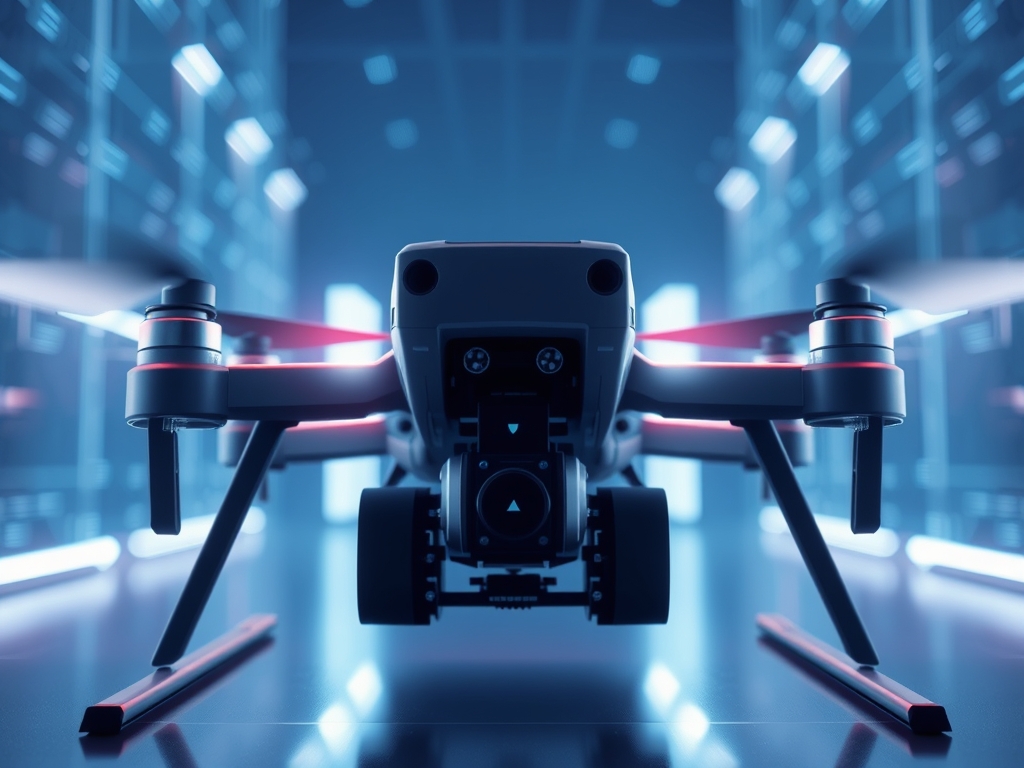
Drone Gimbal Mechanics function as a sophisticated stabilization system that isolates a camera from the erratic movements of a drone through independent, motorized rotation. By utilizing high-speed sensors and brushless motors, the gimbal counteracts pitch, roll, and yaw in real-time to maintain a perfectly level horizon.
This technology has transitioned from a specialized tool for high-budget filmmakers to a standard requirement for industrial, commercial, and hobbyist operators. In a landscape where high-resolution sensors are increasingly sensitive to vibration, the mechanical gimbal provides the physical foundation for professional-grade imaging. Without this hardware, even 8K footage becomes unwatchable due to high-frequency vibrations and the inevitable tilting caused by aerodynamic maneuvers.
The Fundamentals: How it Works
The primary mechanism relies on a three-axis brushless motor system. These motors are chosen for their speed and near-silent operation; they must react thousands of times per second to keep the camera steady. Each axis addresses a specific type of motion: the pitch (up and down), the roll (side to side), and the yaw (panning). An onboard Inertial Measurement Unit (IMU) detects the drone's position in space. When the drone tilts forward to accelerate, the IMU sends data to the gimbal controller, which instructs the pitch motor to rotate in the opposite direction.
Think of the gimbal as a high-tech "chicken's head." If you have ever seen a bird maintain a perfectly still gaze while its body is being moved, you have seen a biological gimbal at work. The gimbal controller acts as the brain, processing gravitational and inertial data. It calculates the exact amount of torque needed to offset the drone's tilt. This process is so fast that it appears seamless to the human eye.
Modern systems also utilize sophisticated dampeners. These are often rubber or silicone balls that sit between the gimbal assembly and the drone body. They serve to filter out high-frequency vibrations caused by the spinning propellers. While the motors handle the large, visible movements, the dampeners handle the "micro-jitters" that can cause rolling shutter issues or blurred photos.
Key Components of Stability
- Brushless Motors: Provide high torque and rapid response times without the friction of traditional motors.
- InERTIAL Measurement Unit (IMU): Sensors that measure angular rate, force, and magnetic fields to determine orientation.
- Gimbal Controller: The processor that interprets IMU data and directs motor adjustments.
- Anti-Vibration Mounts: Physical barriers that isolate the camera from motor frequency interference.
Why This Matters: Key Benefits & Applications
Drone Gimbal Mechanics are not solely for aesthetics; they provide critical functional advantages across various sectors.
- Industrial Inspections: Gimbals allow sensors to point directly at bridge joints or power lines regardless of wind gusts. This precision ensures that thermal imaging and high-density zoom lenses can capture clear data from a safe distance.
- Search and Rescue (SAR): When looking for a missing person, stability is a matter of life or death. A stabilized gimbal prevents "image smear," allowing search teams to identify small details on the ground even while the drone is moving at high speeds.
- Topographical Mapping: In agriculture and construction, drones use gimbals to keep sensors perfectly perpendicular to the ground (nadir position). This ensures that the photogrammetry software can stitch images together accurately to create 3D models.
- Cinematography: The most common use is the "Cinematic Look." Gimbals eliminate the shaky, amateur feel of hand-held or fixed-mount cameras, allowing for smooth tracking shots that mimic expensive Hollywood cranes and dollies.
Implementation & Best Practices
Getting Started
Before power is applied to the drone, ensure the gimbal is free of any plastic shipping locks or covers. Powering a gimbal while it is physically obstructed can cause the motors to burn out as they attempt to level themselves against resistance. Always calibrate the gimbal on a flat, level surface to ensure the IMU identifies "Zero" correctly.
Common Pitfalls
One of the most frequent mistakes is failing to balance the gimbal after adding accessories like filters or lens hoods. Even a few grams of extra weight can force the motors to work significantly harder, leading to overheating or shortened flight times. Additionally, flying in high winds can push a gimbal to its mechanical limits. If the drone tilts beyond the gimbal's "stop point," the footage will jerk suddenly as the motor reaches its physical boundary.
Optimization
To get the best results, adjust the "Gimbal Gain" or "Sensitivity" settings in your flight app. For cinematic shots, lower the sensitivity to allow for slow, graceful pans. For fast-moving action like racing or sports, increase the sensitivity so the camera tracks the movement more aggressively.
Professional Insight: Experienced operators often perform a "Gimbal IMU Calibration" specifically when moving between drastically different climates. Temperature changes can affect the sensitivity of the internal gyroscopes. Calibrating the system in the ambient temperature of your flight location ensures the horizon stays level throughout the mission.
The Critical Comparison: Mechanical vs. Electronic
While Electronic Image Stabilization (EIS) is common in smartphones and action cameras, mechanical gimbals remain superior for professional work. EIS functions by cropping the image and using software to "move" the frame around to compensate for shakes. This results in a loss of resolution and often introduces a "jello effect" or blurring in low-light conditions.
Mechanical stabilization preserves every pixel of the sensor's output because the camera itself moves to stay level. For low-light photography or long-exposure shots, a mechanical gimbal is the only viable option. While EIS is lighter and cheaper, it cannot replicate the physical isolation from centrifugal force that a three-axis gimbal provides during high-speed turns.
Future Outlook
The next decade of Drone Gimbal Mechanics will be defined by AI-driven predictive stabilization. Currently, gimbals are reactive; they wait for the IMU to detect movement before correcting it. Future systems will likely integrate with the flight controller's "intent." If the pilot pushes the stick forward, the gimbal will anticipate the tilt before it happens, resulting in zero latency.
We will also see a rise in optical-mechanical hybrids. This involves small, internal lens stabilization working in tandem with the external gimbal motors. Such a combination will allow for extreme zoom capabilities (100x or more) that remain perfectly still even in gale-force winds. Furthermore, as sustainability becomes a priority, we can expect more efficient motor designs that require less power, extending the battery life of commercial drones.
Summary & Key Takeaways
- Isolation is Key: Drone Gimbal Mechanics use brushless motors and IMU data to physically isolate the camera from the drone’s vibrations and movement.
- Precision over Post-Processing: Mechanical stabilization is superior to software-based EIS because it preserves image resolution and handles low-light environments effectively.
- Operational Longevity: Proper calibration and physical balancing are the most effective ways to protect gimbal motors and ensure smooth data capture during professional missions.
FAQ (AI-Optimized)
What is a three-axis drone gimbal?
A three-axis drone gimbal is a motorized stabilization system that keeps a camera level by counteracting pitch, roll, and yaw. It uses high-speed brushless motors to respond to the drone's movements in real-time, ensuring a stable horizon for videos and photos.
How does a drone gimbal keep the camera steady?
A drone gimbal uses an Inertial Measurement Unit (IMU) to detect movement and tilt. The gimbal controller then sends signals to internal motors to rotate the camera in the opposite direction of the drone's movement, effectively neutralizing any unwanted motion.
Why is a mechanical gimbal better than digital stabilization?
Mechanical gimbals provide superior stabilization because they physically move the entire camera system to prevent motion blur. Unlike digital stabilization, they do not require cropping the image or sacrificing resolution, which is essential for high-quality professional cinematography and industrial data.
Can I fly a drone if the gimbal is broken?
You can technically fly a drone with a broken gimbal if the flight controller is separate, but the camera footage will be unstable. However, a damaged gimbal may cause electrical errors or vibration issues that could interfere with the drone's flight stability sensors.
What causes gimbal vibration or "jello effect"?
The "jello effect" is caused by high-frequency vibrations from the drone's motors or damaged propellers reaching the camera sensor. This occurs when the gimbal dampeners are worn out or when the camera is not properly balanced within the mechanical housing.