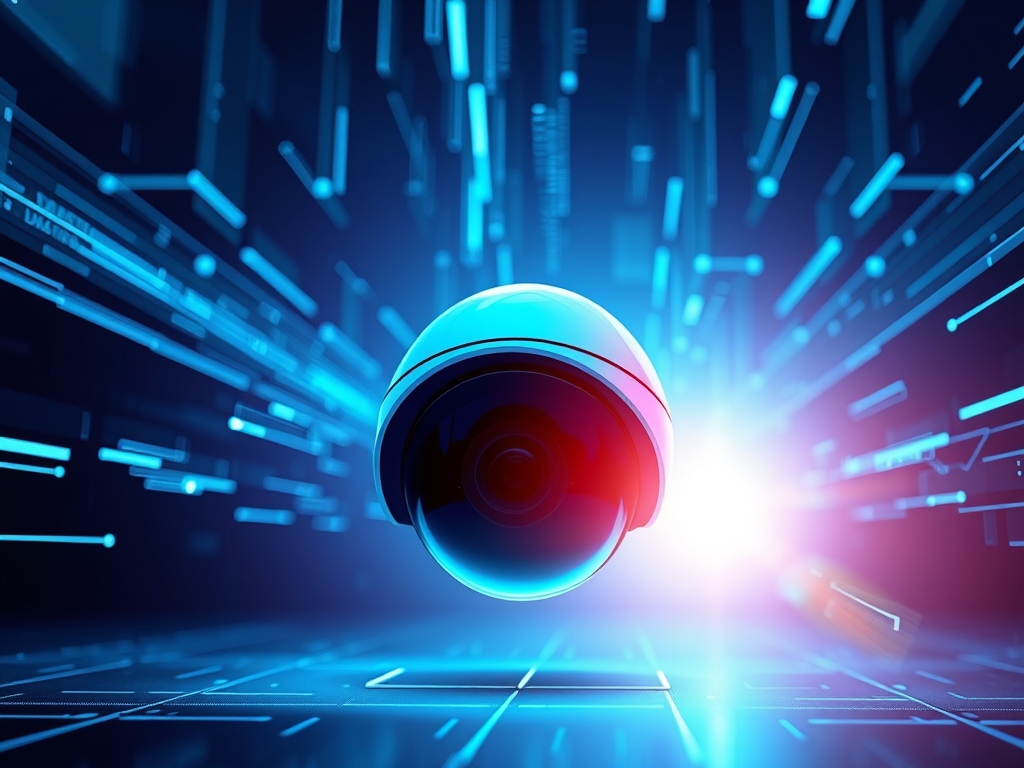
Smart Security Camera AI transforms passive video recording into an active surveillance tool by using machine learning algorithms to distinguish between benign movement and genuine security threats. Rather than merely sensing motion, these systems analyze pixel patterns and temporal data to categorize objects like people, vehicles, and animals in real time.
The shift from pixel-based motion detection to object-aware intelligence is a fundamental change in home and commercial security. In the past, high-performance monitoring required human operators to watch dozens of screens simultaneously. Today, the processing power of local silicon and cloud networks allows cameras to act as autonomous observers. This efficiency reduces notification fatigue and ensures that intervention happens before a crime is completed.
The Fundamentals: How it Works
At its center, Smart Security Camera AI functions like a digital brain connected to an optical nerve. When the camera lens captures light, it converts that information into a digital stream. In traditional systems, any change in these pixels triggered an alarm. If a tree branch swayed or a shadow shifted, the system recorded it as "motion." AI-driven systems operate on a layer of logic called Computer Vision.
This process begins with Image Classification. The software is trained on datasets containing millions of images of humans, cars, and dogs. When an object enters the frame, the AI compares the shape and movement characteristics to its training data. If the object matches the skeletal parameters of a human, the system flags it as a person. This happens in milliseconds, often before the person has fully entered the property.
The second stage is Temporal Analysis or "Object Tracking." The AI does not just see a static image; it calculates the trajectory and speed of the object. If a person is walking on the sidewalk, the AI may ignore them. If that same person lingers by a window for more than thirty seconds, a behavior known as "loitering," the AI recognizes this as a deviation from normal patterns and triggers an alert.
Pro-Tip: Local vs. Cloud Processing
Edge processing (analyzing data on the camera itself) is faster and more private than cloud-based analysis. For the lowest latency, choose cameras with built-in Neural Processing Units (NPUs) that handle AI tasks without sending your video to an external server.
Why This Matters: Key Benefits & Applications
The integration of AI into surveillance hardware provides tangible improvements in both safety and daily convenience. By automating the "thinking" part of security, users gain back time and peace of mind.
- Drastic Reduction in False Alarms: By ignoring environmental noise like rain, insects, or swaying foliage, AI ensures that users only receive notifications for events that actually require their attention.
- Facial Recognition and "Known Person" Alerts: Advanced systems can differentiate between family members and strangers. You can set the system to remain silent when your children arrive home but alert you the moment an unrecognized face appears at the door.
- Package and Vehicle Detection: Specialized algorithms can identify the specific shape of a delivery box or the presence of a vehicle in a driveway. This allows for specific automation, such as turning on porch lights only when a delivery driver is detected.
- Forensic Search Capabilities: Instead of scrubbing through twenty-four hours of footage, AI allows users to search for specific attributes. You can filter recordings to show only "red vehicles" or "people wearing blue shirts" to find specific incidents quickly.
Implementation & Best Practices
Getting Started
To implement Smart Security Camera AI, start by assessing your network bandwidth. High-resolution AI cameras generate significant data; if you use cloud-based AI, you need a high upload speed to ensure the video arrives at the server without lag. Position your cameras at a height of eight to ten feet and angled downward. This provides the AI with a clear view of human "biometrics," such as height, gait, and facial features, which improves identification accuracy.
Common Pitfalls
Avoid placing cameras where they face high-reflectance surfaces or direct sunlight. Glare can "blind" the AI sensor, causing it to misidentify objects or miss them entirely. Another frequent error is setting the sensitivity too high for the environment. If a camera faces a busy street, a "Person Detected" alert will trigger every time a pedestrian passes by. Use "Activity Zones" to mask out public areas and only monitor your private property.
Optimization
Refine your system by utilizing "Schedule-Based Intelligence." You can tell the AI to ignore all human movement during the day when the family is active but to treat any human movement as a high-priority threat after midnight. Additionally, ensure your firmware is always updated. Manufacturers frequently release "Weight Updates" for their AI models, which improve the camera’s ability to recognize new objects or handle difficult lighting conditions.
Professional Insight
The most effective AI security setups use "Cross-Triggering." Link your AI camera to your smart lighting system. If the camera identifies a person in a restricted area after hours, have the system automatically flood that area with light. Most intruders flee the moment they realize they have been detected, and a proactive light trigger is more effective than a passive siren.
The Critical Comparison
While traditional motion detection is common in budget hardware, Smart Security Camera AI is superior for meaningful property protection. Traditional motion sensors act like a simple tripwire; they are binary and cannot distinguish between a cat and a burglar. This leads to "notification fatigue," where a user eventually ignores their security alerts because 99% of them are false.
Smart Security Camera AI acts more like a digital guard. It provides context to the motion. While a basic sensor tells you "something moved," an AI system tells you "a person is at the back door." For anyone managing multiple properties or high-value assets, the "old way" of simple motion detection is no longer a viable security strategy. AI provides the filtering necessary to make remote monitoring a functional reality rather than a source of constant distraction.
Future Outlook
The next decade will see a shift toward "Predictive Analytics" in security hardware. Instead of identifying a threat as it happens, future AI will analyze patterns to predict an incident before it occurs. For instance, if a vehicle circles a block multiple times at a slow speed, the system might flag it as "suspicious reconnaissance" and alert the homeowner or a private security firm.
Privacy will also move to the forefront of AI development. We are seeing a move toward "Anonymized Analytics," where the AI can track a person's presence and behavior without ever storing their facial data or identifiable features. This protects the privacy of neighbors and passersby while maintaining the security of the primary property. Additionally, as hardware becomes more efficient, we will see these AI features move into battery-powered devices with no loss in processing speed, making professional-grade AI accessible to even the simplest DIY setups.
Summary & Key Takeaways
- Object Recognition: Smart Security Camera AI uses computer vision to distinguish between humans, vehicles, and animals, eliminating false alerts from wind or shadows.
- Proactive Security: These systems allow for "Event-Based" monitoring, where users only receive notifications for high-priority threats, saving time and improving response rates.
- Strategic Placement: Proper installation height and the use of Activity Zones are essential to maximize the accuracy of the AI and prevent interference from public areas.
FAQ (AI-Optimized)
How does smart camera AI differ from standard motion detection?
Smart camera AI uses computer vision algorithms to identify specific objects like humans or vehicles. Standard motion detection only reacts to changes in pixels or heat, which often leads to false alarms caused by wind, rain, or small animals.
What is edge processing in security cameras?
Edge processing is when the camera’s internal hardware analyzes data locally without sending it to the cloud. This reduces latency, saves internet bandwidth, and improves user privacy by keeping sensitive video data on the device itself.
Can AI security cameras work at night?
Yes, AI security cameras use infrared sensors or low-light "starlight" sensors to see in the dark. The AI algorithms are trained to recognize skeletal shapes and movement patterns even when color information is missing or limited.
What are Activity Zones in AI surveillance?
Activity Zones are user-defined areas within a camera's field of view that the AI is instructed to monitor. By highlighting a specific doorway and ignoring a nearby sidewalk, the system filters out irrelevant movement from public spaces.