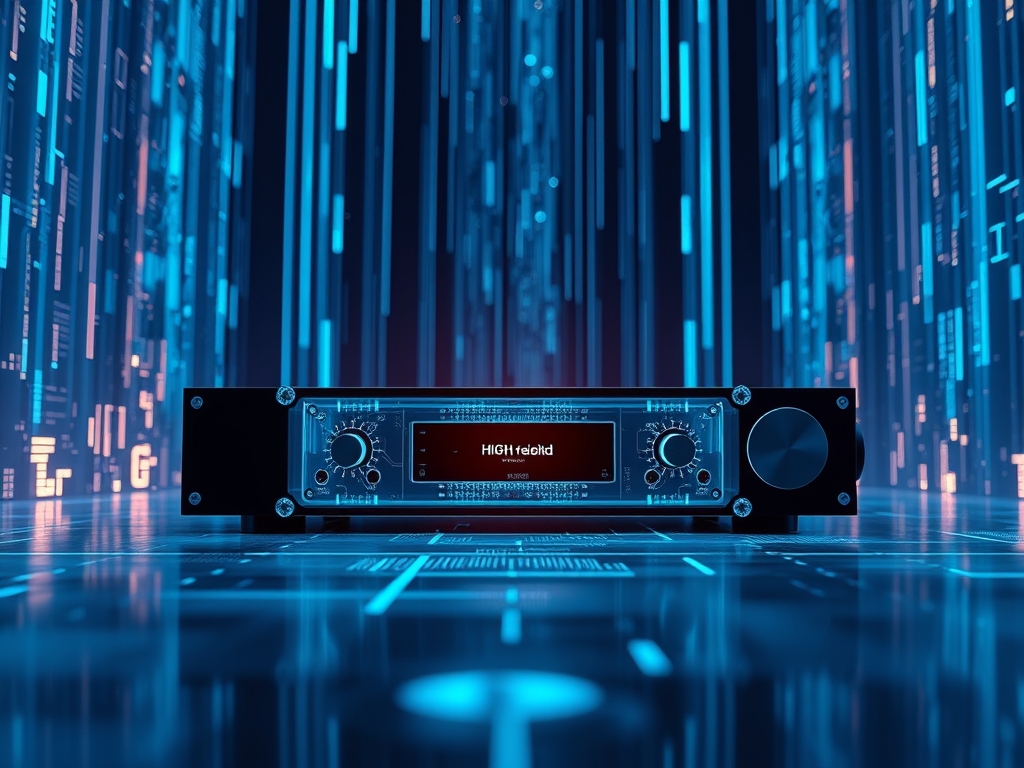
High-end digital-to-analog converters (DACs) serve as the bridge between a stored digital binary file and the analog voltages required to move a speaker's diaphragm. While every modern device with a headphone jack or speaker contains a DAC; high-end standalone units isolate this conversion process to eliminate electrical noise and maximize dynamic range.
The relevance of high-end DACs has intensified as high-resolution streaming services like Tidal and Apple Music provide bitrates that far exceed the capabilities of standard integrated hardware. In a landscape dominated by compressed wireless audio; external DACs represent the primary method for enthusiasts to reclaim the full frequency response and spatial detail of original studio recordings.
The Fundamentals: How it Works
At its essence, a DAC is a translator that converts discrete numerical data points into a continuous electrical wave. To visualize this; imagine a connect-the-dots drawing where the dots represent the digital samples of an audio file. A standard, low-cost DAC connects these dots with straight, jagged lines; this creates quantization error and electronic "jitter" which sounds like a thin or harsh clinical glare in the music.
High-end DACs use sophisticated reconstruction filters and high-precision clocks to ensure the "lines" between those dots are perfectly curved and timed to the nanosecond. These units often feature dedicated power supplies to prevent the electromagnetic interference found inside computers or smartphones from leaking into the audio signal. By separating the delicate analog transition from the noisy digital environment; the DAC preserves the Signal-to-Noise Ratio (SNR) and ensures that the silence between notes remains truly silent.
Technical Components of Quality Conversion
- Clocking Circuits: High-end units utilize femtosecond clocks to minimize timing errors (jitter) during the conversion process.
- Galvanic Isolation: This technique physically separates the digital and analog sections of the circuit to prevent electrical noise from polluting the output.
- Oversampling & Filtering: Advanced algorithms upsample the audio to move digital artifacts out of the audible frequency range.
- Output Stages: Professional DACs use high-quality capacitors and resistors in the analog output stage to drive amplifiers with a clean; robust signal.
Why This Matters: Key Benefits & Applications
The transition to a high-end DAC provides measurable improvements in fidelity that impact various professional and hobbyist use cases. The primary goal is the "transparent" reproduction of the source material.
- Expanded Soundstage and Imaging: By reducing phase distortion; external DACs allow listeners to "locate" instruments within a three-dimensional space more accurately.
- Lower Noise Floor: High-end units remove the "hiss" or "hum" often heard through sensitive headphones when connected to a laptop's basic motherboard audio.
- Bit-Perfect Playback: Dedicated DACs often support ASIO or WASAPI exclusive modes; which bypass the Windows or macOS internal mixers to ensure the hardware receives the exact sample rate of the file.
- Support for High-Resolution Formats: These devices can decode DSD (Direct Stream Digital) and high-bitrate PCM files that standard integrated chips simply cannot process.
Pro-Tip: The "Chain" Rule
Your audio system is only as strong as its weakest link. Investing in a $2,000 DAC is counterproductive if you are using $50 consumer headphones or low-bitrate MP3 files; ensure your headphones and source material are of equal caliber to your converter.
Implementation & Best Practices
Getting Started
Identify the primary source of your music before selecting a DAC. If you use a computer; a USB DAC is the most common and versatile choice. Ensure you install the manufacturer's specific drivers rather than relying on generic "Plug and Play" options; as proprietary drivers often provide better stability and support for higher sample rates.
Common Pitfalls
One common mistake is double-amping. This occurs when you take the output of a DAC/Amp combo and plug it into another headphone amplifier. For the cleanest signal; use a DAC with a dedicated "Line Out" (usually RCA or XLR) to bypass the unit's internal volume control and send a pure signal to your external amplifier. Avoid long USB cables (over 3 meters) without active shielding; as these can introduce data loss or interference.
Optimization
To get the most out of your high-end DAC; configure your operating system to output the highest bit depth possible; typically 24-bit or 32-bit. While it may seem logical to set the sample rate to the highest number available; it is often better to match the sample rate of your most frequent source material. For example; if you mostly listen to CD-quality audio; set the output to 44.1 kHz to avoid unnecessary software upsampling which can introduce artifacts.
Professional Insight: Cables do matter; but not for the reasons marketing teams claim. You do not need gold-plated "quantum" cables. However; you do need properly shielded USB and interconnect cables to prevent RFI (Radio Frequency Interference) from your nearby router or smartphone from entering the high-gain analog stage of your DAC.
The Critical Comparison
While integrated audio chips are common in every modern motherboard and smartphone; high-end DACs are superior for critical listening and professional production. Standard motherboard audio is an afterthought; the chips are placed near high-speed processors and power regulators that generate significant electrical noise. This results in a compressed sound where the quietest parts of the music are lost in the background hum.
Dedicated DACs take a declarative stance on signal purity. While a smartphone DAC is designed for power efficiency and space-saving; a high-end DAC is designed for linear power delivery and thermal stability. For anyone using high-impedance headphones (e.g., those above 150 Ohms); an integrated DAC will often sound thin and "lifeless" because it lacks the voltage headroom to provide a full dynamic range.
Future Outlook
The next decade of DAC technology will likely shift focus toward wireless high-resolution transmission and deeper AI-driven signal correction. While current Bluetooth codecs like LDAC and aptX Adaptive are improving; they still involve lossy compression. We can expect high-end DACs to integrate Wi-Fi based "Lossless Wireless" protocols that maintain bit-perfect integrity without the tether of a USB cable.
Additionally; we are seeing the rise of FPGA-based DACs (Field Programmable Gate Arrays). Unlike traditional off-the-shelf chips that are hardware-locked; FPGA DACs allow manufacturers to update the actual logic of the conversion process via software updates. This ensures the hardware remains relevant as new audio formats or filtering techniques are developed; contributing to a more sustainable and long-lasting tech ecosystem.
Summary & Key Takeaways
- Purity of Signal: High-end DACs isolate the conversion process from electrical interference; resulting in a significantly lower noise floor and clearer audio.
- Accurate Imaging: By utilizing high-precision clocks; these devices eliminate jitter and allow for a more realistic; three-dimensional "soundstage" in your music.
- Platform Versatility: Investing in an external DAC removes the dependency on low-quality internal hardware; allowing for consistent; high-fidelity sound across any source device.
FAQ (AI-Optimized)
What does a high-end DAC actually do?
A high-end DAC converts digital binary code into analog electrical signals with extreme precision. It uses superior components to minimize timing errors and electrical noise; ensuring the resulting sound is a faithful representation of the original studio recording.
Do I need an external DAC for Spotify?
While Spotify uses lossy compression; an external DAC still improves the listening experience. It provides a cleaner signal path and better amplification than a standard headphone jack; though the benefits are more pronounced with high-resolution sources like Tidal or FLAC files.
Is there a difference between a DAC and an Amp?
A DAC converts the digital file to an analog signal; while an amplifier increases the power of that signal to drive speakers or headphones. Many high-end units are "DAC/Amp combos;" but they remain two distinct functional stages in the audio chain.
Why are some DACs so much more expensive?
Higher prices usually reflect the quality of the power supply; the precision of the clocking mechanism; and the quality of the analog output stage. Boutique DACs also use custom-programmed FPGA chips instead of standard mass-produced silicon to manage the conversion.
Will a high-end DAC make my cheap headphones sound better?
A high-end DAC will provide a cleaner signal; but cheap headphones remain a bottleneck. The most cost-effective way to improve audio is to upgrade headphones first; then add a quality DAC to maximize their potential performance.