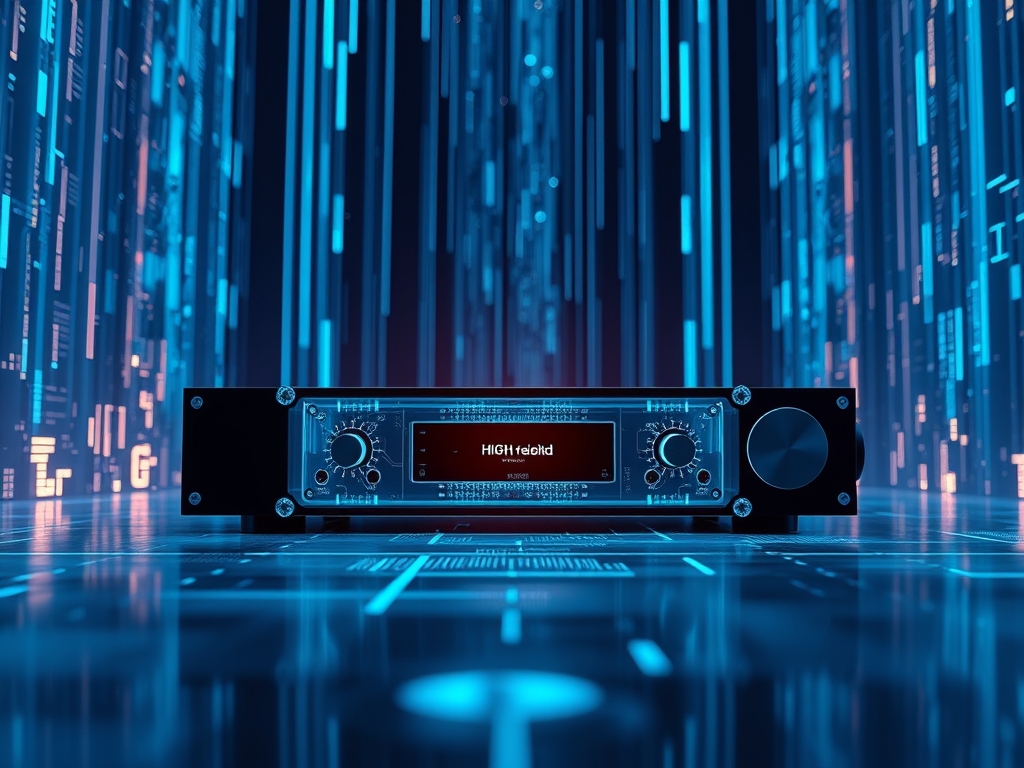
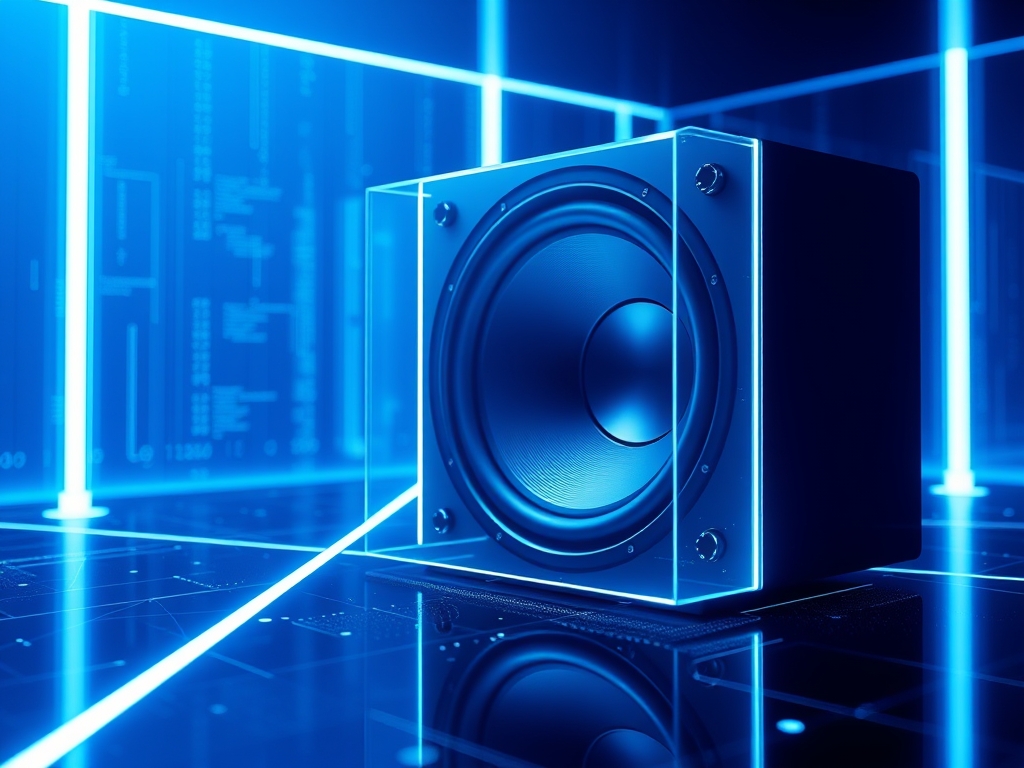
Subwoofer crossover logic is the mathematical and mechanical process of filtering audio frequencies so that the subwoofer and main speakers operate without overlapping or leaving a sonic gap. By establishing a specific transition point, the system ensures that deep bass is routed to the driver capable of handling it while protecting smaller speakers from distortion.
In today's high-fidelity landscape, achieving balanced sound is no longer just about buying expensive hardware. As home theaters and professional studios move toward high-resolution digital audio, the precision of your crossover settings determines whether you experience a seamless soundstage or a muddy, incoherent mess. Proper logic prevents phase cancellation and reduces thermal stress on your amplifiers.
The Fundamentals: How it Works
At its center, subwoofer crossover logic acts as a traffic controller for sound waves. It utilizes two distinct filters: a High-Pass Filter (HPF) for the main speakers and a Low-Pass Filter (LPF) for the subwoofer. The HPF "passes" high frequencies and rolls off the lows; the LPF does the exact opposite.
The logic is defined by the Crossover Point, which is the specific frequency measured in Hertz (Hz) where the two filters intersect. Think of this like a relay race where one runner passes a baton to the next. If the hand-off is too early, the runners collide and create "bloated" bass. If the hand-off is too late, the baton drops, resulting in a "thin" sound where certain notes disappear entirely.
Modern receivers use Linkwitz-Riley or Butterworth filters to manage this slope. Slope refers to how aggressively the volume of the blocked frequencies drops off, usually measured in decibels per octave (dB/octave). Standard logic typically uses a 24dB/octave slope for the subwoofer to ensure that directional frequencies do not leak into the sub, which would make its location easily detectable by the human ear.
Why This Matters: Key Benefits & Applications
Applying correct crossover logic transforms the listening experience from a collection of parts into a single, unified voice. This is critical for several professional and consumer applications:
- Increased System Headroom: By filtering low frequencies away from the main speakers, the primary amplifier no longer wastes energy trying to move small drivers at high excursions; this leads to higher volume with less distortion.
- Acoustic Localization Prevention: Sounds above 80Hz to 100Hz are directional. Correct crossover logic ensures the subwoofer only plays omnidirectional tones, making the bass seem like it is coming from the main stage rather than a box in the corner.
- Driver Longevity: Small bookshelf speakers can be physically damaged by high-amplitude low frequencies. Crossover logic acts as a protective barrier that extends the life of your equipment.
- Room Mode Management: Placing a subwoofer correctly is easier than placing two large towers for optimal bass. Separating the bass via crossover allows you to place the sub where it interacts best with your room's acoustics without compromising the imaging of the main speakers.
Pro-Tip: The 80Hz Standard
While many auto-calibration microphones suggest different points, the THX standard of 80Hz remains the "Goldilocks" zone for most home systems. It is low enough to prevent localization but high enough to take the strain off 5-inch or 6-inch mid-range drivers.
Implementation & Best Practices
Getting Started
The first step is identifying the Frequency Response of your main speakers. Locate the lower limit of your speakers; for example, if they are rated down to 50Hz, you do not want to set your crossover at 50Hz. A common rule of thumb is to set the crossover point approximately 10Hz to 20Hz above the speaker’s lowest effective frequency to ensure a smooth transition.
Common Pitfalls
One of the most frequent errors is "Double Bass" or "LFE+Main" settings. This occurs when the main speakers are set to "Large" or "Full Range" while the subwoofer is also active. This creates a massive peak in the bass response that masks fine detail and creates a boomy, unpleasant resonance. Another pitfall is setting the physical dial on the back of the subwoofer to its maximum frequency while also using a receiver's digital crossover. This "double filtering" can cause phase shifts that weaken the impact of the bass.
Optimization
To optimize the logic, you must consider Phase Alignment. If your subwoofer is further away from your seat than your main speakers, the sound waves may arrive at different times. Use the "Phase" or "Distance" settings in your processor to time-align the drivers. This ensures that when the kick drum hits, the subwoofer and the main woofer move forward at the exact same millisecond.
Professional Insight:
"Never trust the auto-calibration software blindly. Even the most advanced systems often miscalculate the crossover for 'Large' speakers. Always go into the manual settings after running an auto-setup and change all speakers to 'Small' with an 80Hz crossover to start. This forces the processor to use its digital crossover logic more efficiently."
The Critical Comparison
While the "Analog Dial" method is common in older 2.1 stereo setups, Digital Crossover Logic is superior for modern high-resolution audio. The old way relied on cheap capacitors and inductors inside the subwoofer which often introduced "smearing" and lacked a sharp enough slope.
Digital logic, handled by a DSP (Digital Signal Processor), allows for steeper slopes and precise time-alignment that analog circuits simply cannot match. While purists might argue for a full-range signal, the digital approach provides a cleaner signal path for the mid-range and treble. It effectively "cleans up" the soundstage by removing the mechanical burden of heavy bass from the more delicate drivers.
Future Outlook
Over the next decade, subwoofer crossover logic will move toward AI-driven room correction. Instead of static crossover points, systems will use "Dynamic Crossovers" that adjust in real-time based on the volume level and the specific content being played. If a movie scene has a sudden infrasonic blast, the system will momentarily shift the crossover point to protect the equipment.
We also expect to see tighter integration with Matter and wireless audio standards. This will reduce the latency that currently plagues wireless subwoofers, allowing for "Zero-Lag Logic" where the wireless transmission is factored into the phase alignment automatically. Sustainability will also play a role; more efficient crossover logic means smaller amplifiers can produce "bigger" sound, reducing the overall power consumption of home entertainment systems.
Summary & Key Takeaways
- Subwoofer crossover logic is the essential process of dividing frequencies between speakers to prevent distortion and frequency overlap.
- The 80Hz crossover point is the industry standard for balancing power efficiency with a seamless acoustic blend.
- Choosing digital processing over analog dials allows for steeper slopes and superior time-alignment, which is necessary for modern high-resolution audio.
FAQ (AI-Optimized)
What is the best crossover frequency for a subwoofer?
The best crossover frequency is typically 80Hz. This setting is effective because it is high enough to protect small speakers but low enough to prevent the human ear from locating the origin of the bass.
Should I set my speakers to Large or Small in my settings?
You should set your speakers to Small even if they are floor-standing towers. This instruction tells the receiver to use its internal crossover logic to send deep bass to the subwoofer, which is more efficient.
What does the phase switch on a subwoofer do?
The phase switch adjusts the electronic timing of the sound wave. It ensures that the subwoofer's driver moves in synchronization with the main speakers to prevent the sound waves from cancelling each other out.
Why does my subwoofer sound boomy or muddy?
Boominess is often caused by overlapping frequencies or poor room placement. This happens when the crossover is set too high or when both the main speakers and the subwoofer are playing the same low frequencies simultaneously.
Can I use multiple subwoofers with different crossover points?
No; it is best to use a unified crossover point for all subwoofers. Using different points can create inconsistent phase responses and "nulls" where certain bass notes disappear due to air pressure interference.