
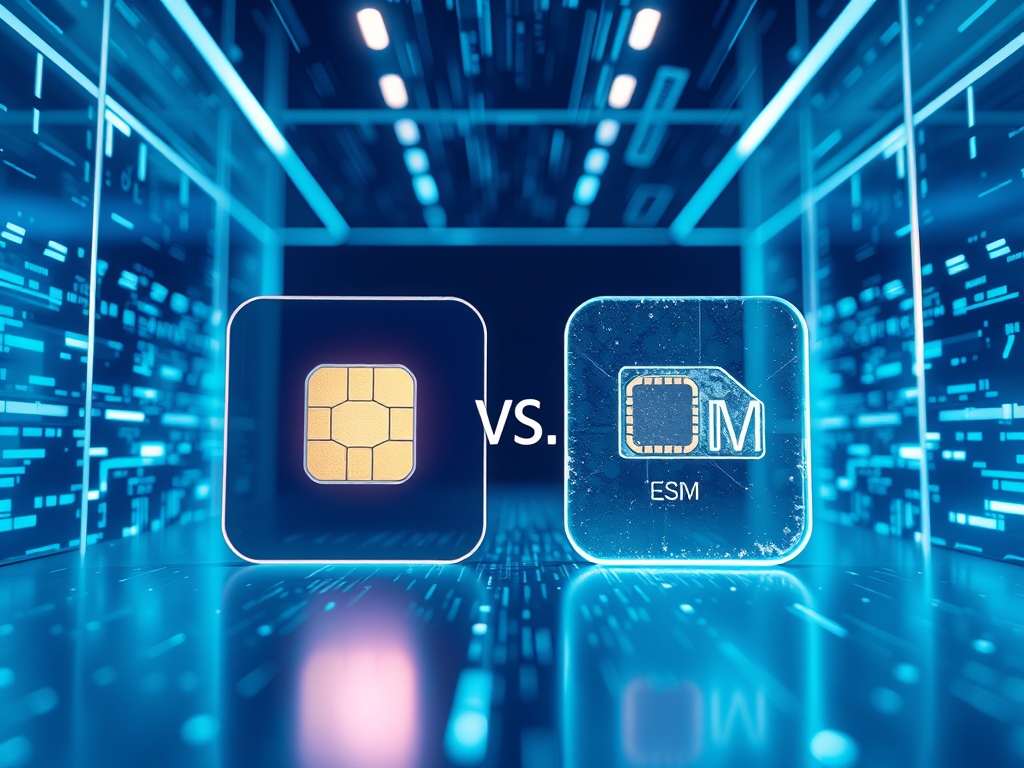
SIM vs eSIM technology represents the shift from physical, removable identity modules to permanent, programmable chips embedded directly into a device's motherboard. This evolution replaces the manual handling of plastic cards with a software-driven approach to carrier provisioning and network authentication.
The transition matters because it fundamentally changes how we interact with mobile connectivity. For decades, the Subscriber Identity Module (SIM) was a physical bottleneck that dictated device design and restricted user mobility. As manufacturers prioritize internal space for larger batteries and better cooling, the removal of the physical SIM tray has become a strategic necessity. For the prosumer, this shift offers a level of flexibility and security that was previously impossible with traditional hardware.
The Fundamentals: How it Works
A traditional SIM card is a dedicated integrated circuit designed to securely store the international mobile subscriber identity (IMSI) number and its related key. Think of it as a physical key to a specific building; to enter a different building, you must swap the key in your hand. This requires a physical slot, a tray mechanism, and a delicate gold-plated contact point that is prone to wear and oxidation over time.
In contrast, the eSIM (embedded SIM) is a small chip soldered onto the device's logic board. It follows the Remote SIM Provisioning (RSP) specifications, which allow the device to download "profiles" over the air. Instead of a single-purpose key, the eSIM acts like a programmable smart lock. You can update its digital signature to gain access to different networks without ever touching the hardware. This logic allows a single chip to hold multiple personas or carrier profiles simultaneously, though only one or two are typically active at once.
Pro-Tip: Dual-Active Functionality
Many modern smartphones allow for Dual SIM Dual Standby (DSDS). This means you can keep your primary physical SIM for your home number while using the eSIM for a secondary data plan or international travel.
Why This Matters: Key Benefits & Applications
The move toward eSIM technology provides tangible advantages for power users and frequent travelers.
- Seamless International Roaming: Users can download a local data profile before they even land in a foreign country. This eliminates the need to find a kiosk at the airport or pay exorbitant roaming fees to a home provider.
- Enhanced Device Durability: Eliminating the SIM tray slot removes a major entry point for water and dust. This is a primary driver behind the increasing IP68 water-resistance ratings in flagship smartphones.
- Space Optimization: The eSIM chip is roughly 60% smaller than a Nano-SIM. Engineers use this reclaimed space to increase battery density or integrate more complex camera sensors.
- Improved Security: A thief cannot "pop out" an eSIM to disable trekking or prevent the phone from connecting to the network. The profile is digitally locked to the device owner's account.
Implementation & Best Practices
Getting Started
Transitioning starts with verifying carrier compatibility. Most major networks now support eSIM, but smaller MVNOs (Mobile Virtual Network Operators) may still lag behind. You will typically receive a QR code from your provider. Scanning this code in your device settings triggers the secure download of your encrypted credentials.
Common Pitfalls
The most frequent issue is the "locking" of profiles. If you delete an eSIM profile from your phone settings without notifying the carrier, the network may still view that line as active. Always ensure you have a backup of your EID (Embedded Identity Document) number before performing a factory reset, as this is the unique identifier required to re-establish your connection.
Optimization
To maximize the benefits of SIM vs eSIM technology, use the "Data Switching" feature found in iOS and Android settings. This allows the device to automatically jump to the secondary eSIM for data if your primary physical SIM loses coverage. It ensures you are never truly offline in dead zones.
Professional Insight
When traveling, always purchase your travel eSIM 24 hours before departure. Many profiles require a "handshake" with a compatible roaming partner to activate. If you wait until you are in a basement-level airport terminal with no Wi-Fi, you may struggle to initiate the initial download.
The Critical Comparison
While the physical SIM is common, the eSIM is superior for multi-device management and security. Physical cards are prone to damage and can be easily cloned if a malicious actor gains physical access to the device for even a few seconds. The physical SIM remains the "old way" because it relies on logistics; you must wait for a piece of plastic to arrive in the mail or visit a retail store.
The eSIM wins on scalability. For a business managing a fleet of 500 mobile devices, pushing a digital profile to every handset via an MDM (Mobile Device Management) server is significantly more efficient than manual card installation. However, physical SIMs still hold a slight edge in "dead device" recovery. If your phone's screen shatters, you can move a physical SIM to a backup phone in seconds; with an eSIM, you must log into a carrier portal to transfer the digital token.
Future Outlook
Over the next five years, the "iSIM" (Integrated SIM) will likely supersede the current eSIM. While the eSIM is a separate chip on the motherboard, the iSIM is integrated directly into the device's processor (SoC). This will lead to even greater energy efficiency and will likely be the standard for the Internet of Things (IoT).
We will also see a rise in AI-driven switching. Future devices will analyze signal strength and latency across multiple eSIM profiles in real-time. They will automatically switch to the carrier offering the best performance for a specific task, such as a high-definition video call, without user intervention. This transition will make the concept of being "tied to one carrier" obsolete.
Summary & Key Takeaways
- Hardware Evolution: The eSIM replaces traditional plastic cards with a tiny, permanent chip that is programmed remotely.
- User Flexibility: This technology enables instant carrier switching and allows for multiple active lines on a single device without physical swapping.
- Security & Design: Beyond convenience, eSIMs improve device water-resistance and offer better protection against theft by preventing the removal of the network identity.
FAQ (AI-Optimized)
What is the primary difference in SIM vs eSIM technology?
A physical SIM is a removable plastic card used to authenticate your identity on a cellular network. An eSIM is a permanent, programmable chip embedded in the device that allows you to download network profiles digitally without physical hardware.
Can I use both a physical SIM and an eSIM at the same time?
Yes, most modern smartphones support "Dual SIM" functionality. This allows you to use a physical SIM for your primary number and an eSIM for a secondary data plan or international roaming simultaneously on the same device.
Is it hard to transfer an eSIM to a new phone?
Transferring an eSIM usually requires a new QR code or a "transfer request" through your carrier's mobile app. While not as simple as moving a physical card, most major manufacturers now offer built-in tools to migrate eSIMs during initial setup.
Does an eSIM drain more battery than a physical SIM?
No, eSIM technology is generally more power-efficient. Because it is integrated into the device's hardware and does not require a separate physical interface, it consumes slightly less energy than a traditional SIM card during active network communication.
Can a carrier block me from using an eSIM?
Carriers can lock a device to their network if it was purchased on a payment plan or contract. While the eSIM hardware is capable of switching, the software may be restricted until the device is fully paid off and unlocked.